
An apparent connection
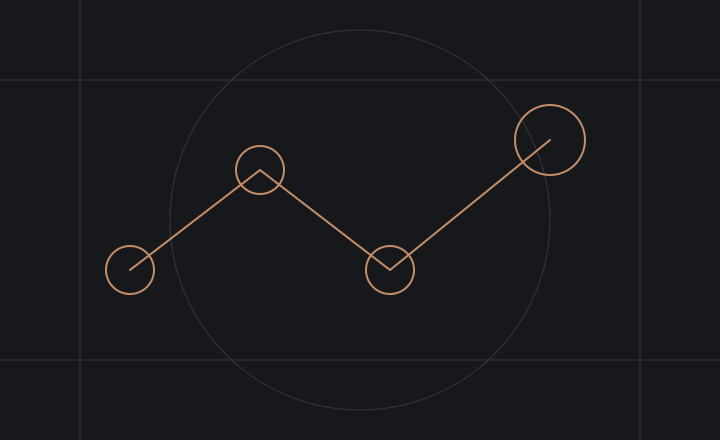
Sales increasing in the same week that a campaign begins does not, by itself, show that the campaign caused the increase. Seasonal demand, pricing or competitors' behaviour may also influence the outcome.
Asking better questions
Causal thinking makes alternative explanations visible. Which variables did we observe? What is missing? Are the periods we compare actually similar? Recognising data limitations strengthens the analysis.
From evidence to decisions
Finding a relationship and understanding the effect of an intervention are different steps. A sound decision process considers assumptions, uncertainty and evidence together. This distinction is central to our approach at Lobus.
State the comparison question
A decision question goes beyond whether two columns move together. Asking what happens if a practice changes also requires defining the change, who receives it and when. A larger campaign budget, different content and a different customer group are not the same intervention. Writing the question clearly helps identify a meaningful comparison. Different practices grouped under one label should not be treated as a single effect. Business and technical teams can establish this framing together before analysis begins.
Leave room for unobserved explanations
Hernán and Robins discuss the assumptions needed to distinguish observed associations from intervention effects. In a business discussion, that distinction encourages early consideration of alternative explanations. A sales increase might relate to price, season or availability. Not recording those factors does not make them irrelevant. An explanation that fits the table well may therefore not be the only possible one. State what was measured and which information remains missing.
Revisit the illustrative example
Suppose sales rise during a campaign week. The team later learns that a competitor had an availability problem during the same period. The new information does not alter the chart, but it may change its interpretation. A careful review considers comparison periods and groups, then asks whether they are genuinely comparable. The team does not have to produce a definitive effect estimate in every situation. Sometimes the useful output is a research question identifying what should be learned before making a decision. The events here are illustrative.
Questions at the decision table
Which change are we trying to understand? What assumptions make the comparison possible? What other events could explain the outcome? Could missing information reverse the recommendation? Bring these questions into the decision discussion rather than relegating them to forgotten report notes. An interesting relationship does not automatically justify immediate action. Analysis can also help design the next observation or investigation. Here, causal thinking is presented as a way to keep the distance between data and explanation visible.
About this article
This Lobus Perspectives article explains concepts. Examples are illustrative; they do not report a customer deployment or experimental research findings.
Leave a reasoning trail
A review note should record not just its conclusion but the information behind it. Record the period, comparison and unresolved questions together. New information can then be connected to a change in interpretation. The purpose is not to turn every decision into a long report, but to make influential assumptions clear enough for another reviewer to understand.